
Follow the light
How autonomous vehicles find the safest path by thinking like a lamp - by Simone Baratto
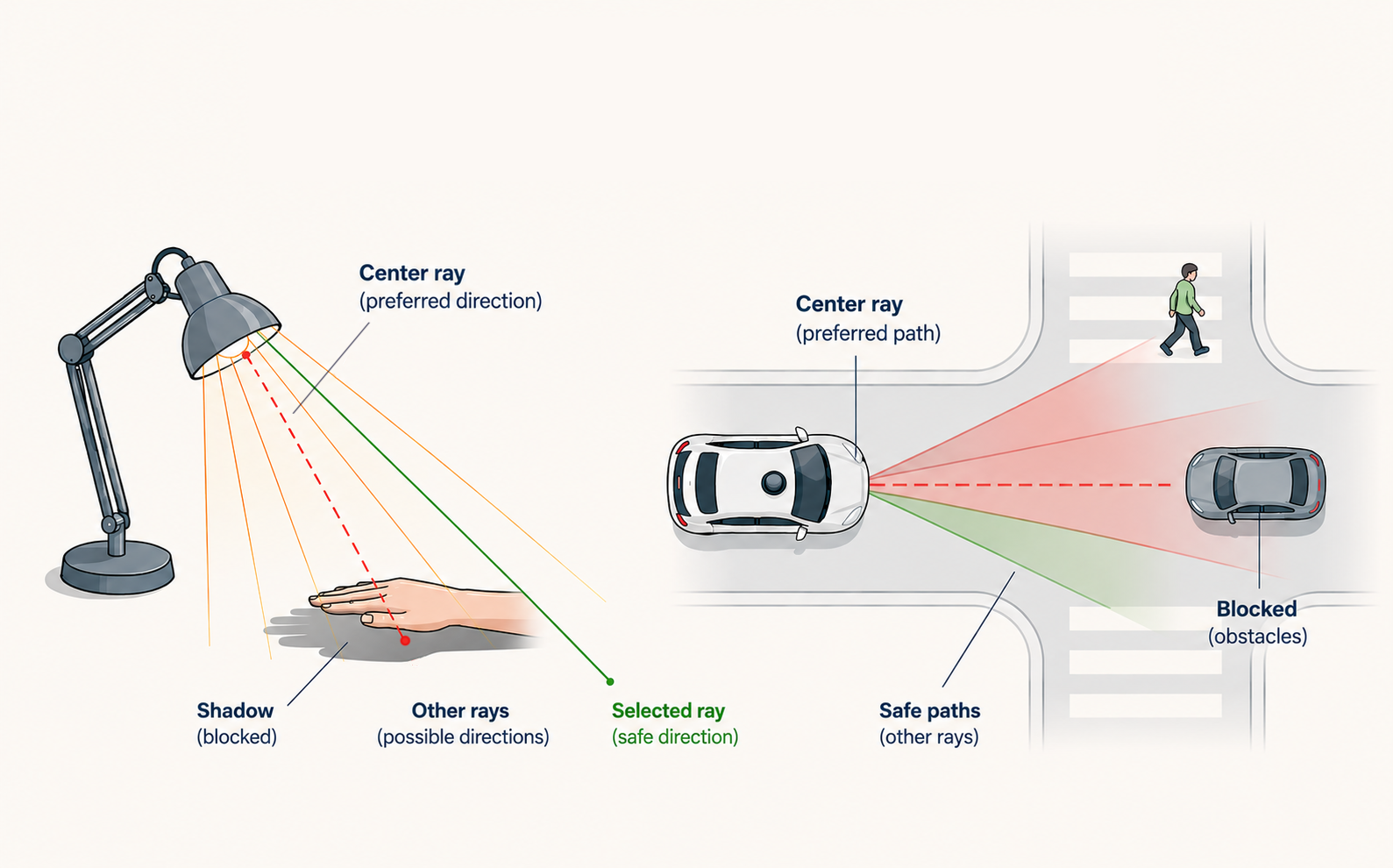
Imagine taking a driverless taxi. Researchers claims it’s the safest transport, yet if you’ve seen AI chatbots confidently fail simple tasks. Therefore, trusting a computer at a busy intersection feels risky. Let me convince you, and to understand why, you just need to think about a desk lamp.
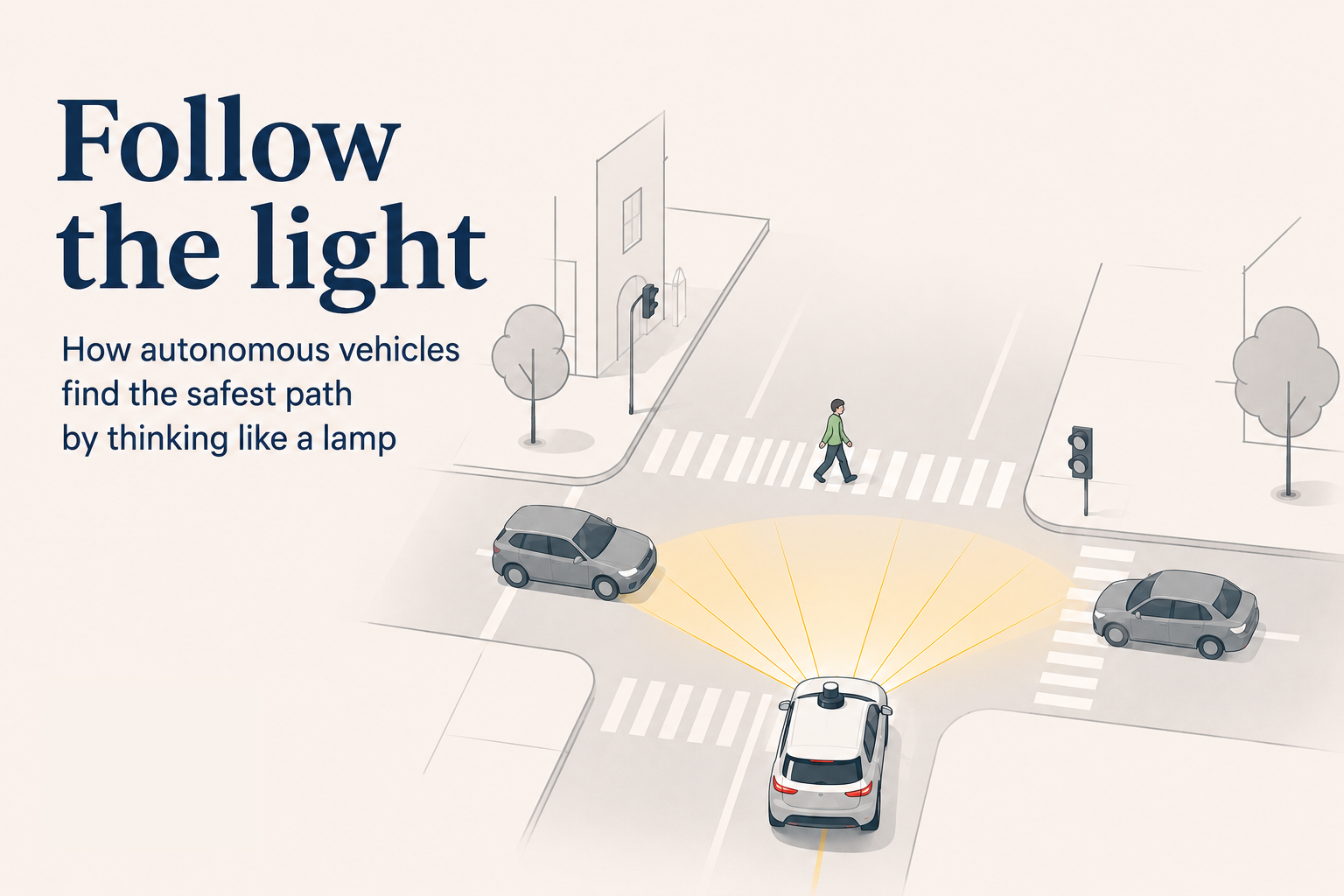
Consider that lamp: you aim it exactly where you want to see. The light is most intense at the beam’s center, which is the straight line running from the bulb to the desk. If you slide your hand midway, a shadow appears because your palm intercepts specific rays.
Autonomous vehicles reason identically. The lamp is the car, and the beam’s center is your preferred direction, for example Google Maps suggested route. At an intersection, following that center ray mean crossing in a straight line, which is the fastest option.
When other vehicles appear, they block your ideal path as your hand blocks the light rays. To stay safe, the car must change direction. Every individual light ray represents a possible direction. Since many rays aren’t blocked, the car must decide which one reaches the goal quickest without hitting an obstacle.
The car selects the ray closest to the original center. By making the smallest possible steering change, it ensures safety while deviating from your path only as much as necessary.
Since obstacles move, the car performs this ”light-aiming” calculation hundreds of times per second. Just as moving your hand shifts the shadow on the desk, a pedestrian or merging vehicle changes the available safe directions.
While some AI is built to guess the next word in a sentence, this system relies on rigid mathematical rules and constant verification rather than intuition. By processing these checks in milliseconds, it reacts with a level of precision and speed that no human driver can match, and that’s why you should trust it to drive your car.
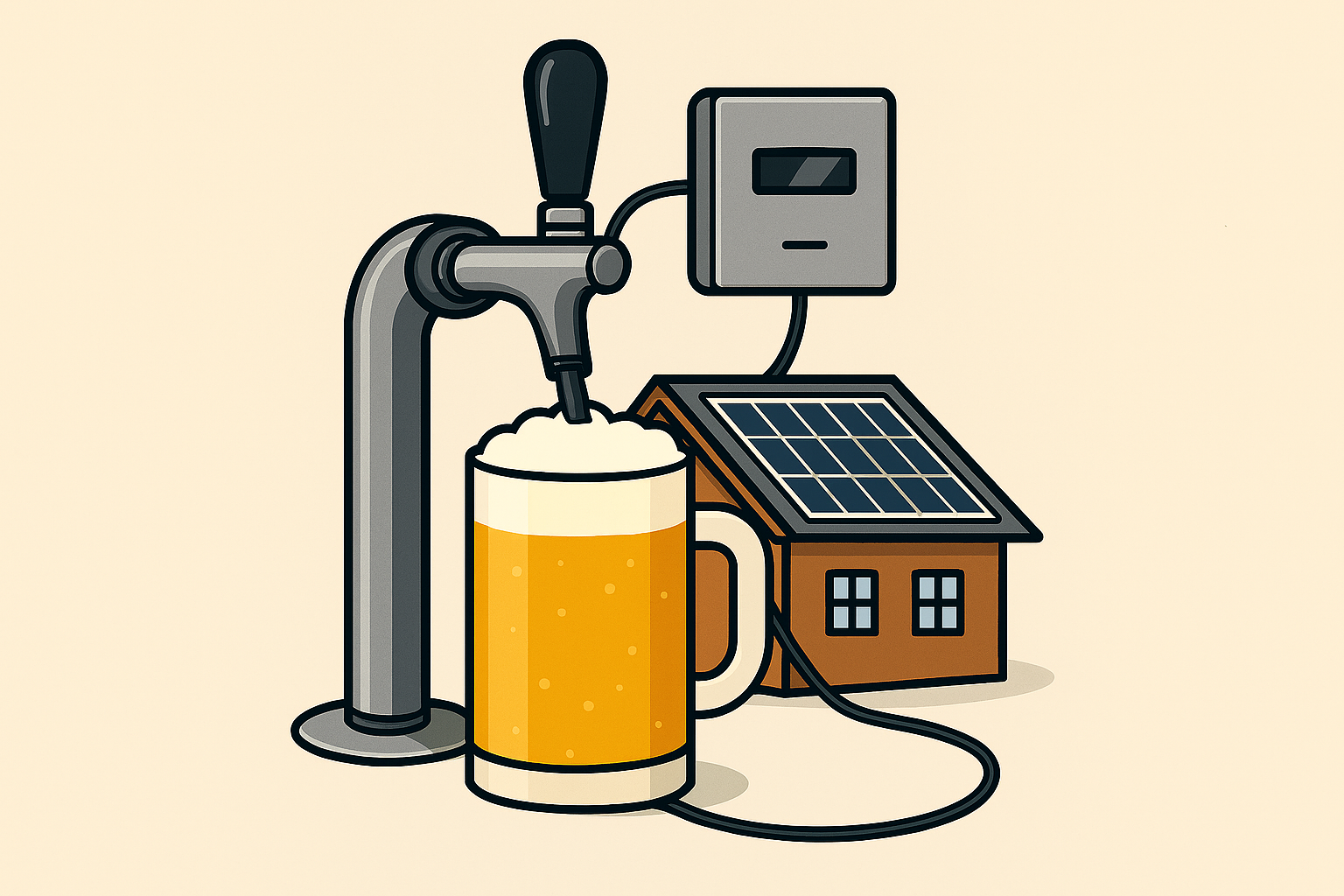
Text by Simone Baratto; illustration generated with ChatGPT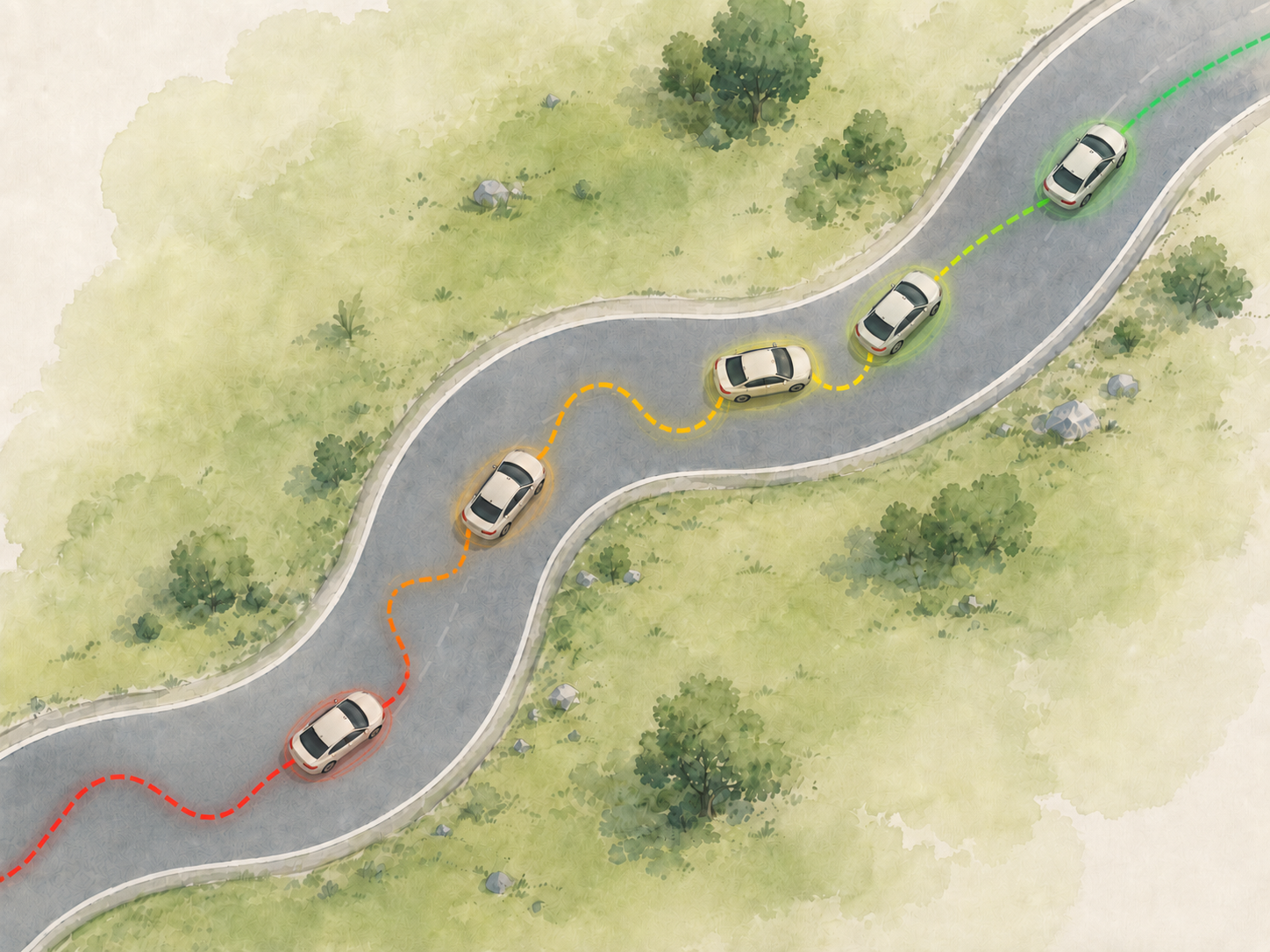











How curiosity, rather than imitation, can help robots make sense of the physical world - by Tim Lücking