
Whispers in the Kitchen
How to combine safe and reliable control with high-performance learning-based strategies - by Nicolas Kirsch
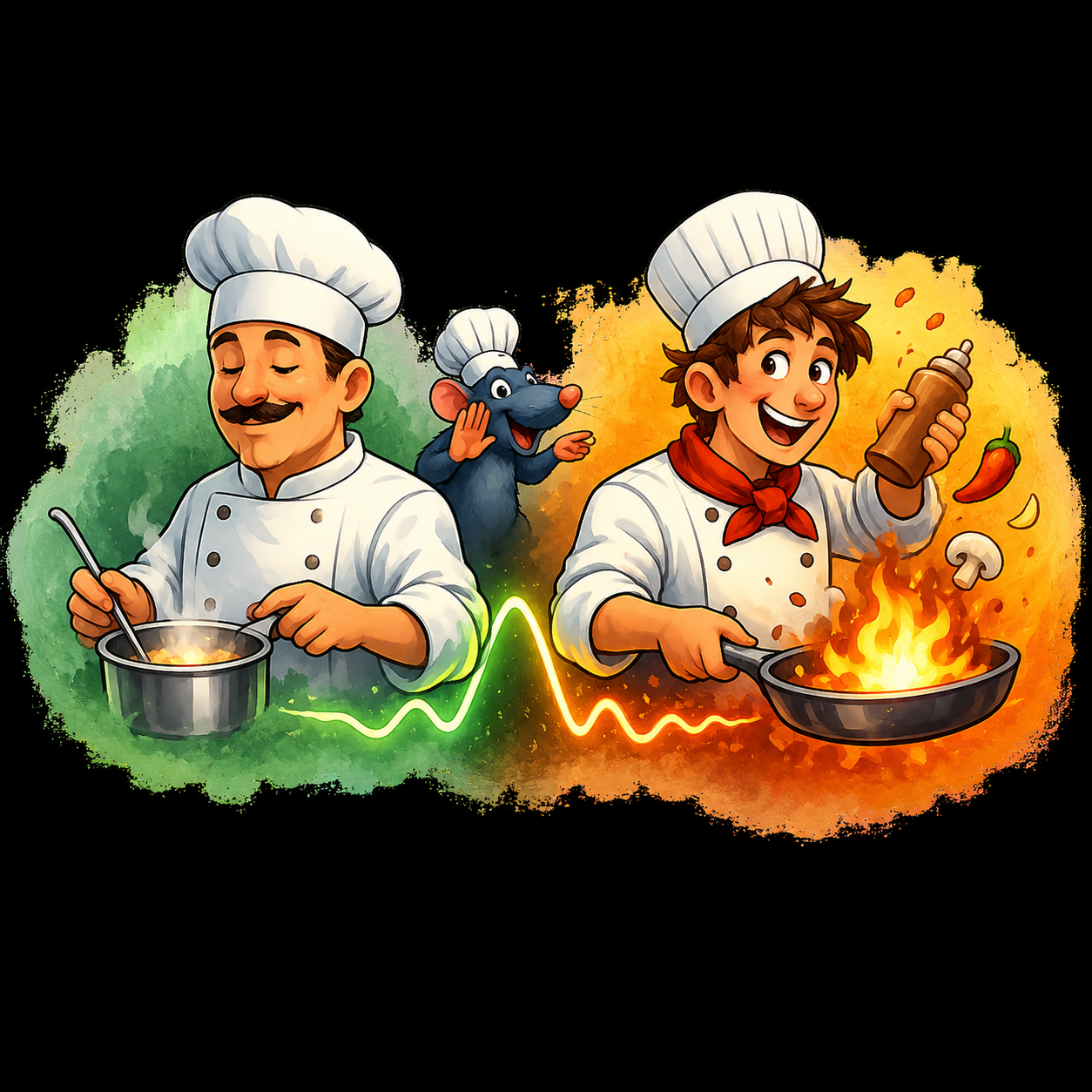
After a long and tiring day at work, you go to a restaurant to relax. The waiter arrives and gives you a choice:
One option is for your meal to be prepared by a reliable chef: your meal will be edible, but probably not very exiting. Otherwise, it can be cooked by a wildly creative genius which has the potential to make innovative and delicious meals, but sometimes goes too far and ends up making something inedible. Which chef would you chose?
In control theory, we face a very similar dilemma. Control is about choosing the best actions to make a system behave the way we want, just like a cook chooses a recipe to create the meal they have in mind. In practice, control engineers often have to choose between two approaches. On one hand, they can use safe and reliable strategies. They may not give the best possible performance, but engineers understand them well and know exactly how the system will behave, just like the reliable chef knows his recipes. On the other hand, one can use more innovative strategies. These can lead to much better behavior, but they are harder to manage and may fail, like the creative chef.
The goal of my PhD is to break this dichotomy and bridge the gap between the two approaches. Going back to our restaurant, I want to find a way get the guarantee that the dish will be edible thanks to the reliable chef, but also that it will be delicious thanks to the creative one.
I do so by designing an approach similar to what the rat Rémi does in the movie Ratatouille. There, the reliable chef is the one really cooking, ensuring that the dish will be edible and the kitchen will not go on fire. However, Rémi is also there, but he does not cook directly. Instead he whispers in the other cook’s ear, influencing decisions, and injecting creativity into the process. This setup enables the team to make faster, more exotic meals successfully, while being sure that all will go well.
In our control framework, we do something similar. A reliable strategy guarantees stability and safety. On top of that, a second, more creative layer influences it, improving performance without taking away the guarantees. This way, we can get the best of both worlds: systems that are both safe and reliable, and high-performing and innovative.
Thanks to Rémi, you do not have to choose the chef anymore!
Text by Nicola Kirsch; illustration generated with ChatGPT 




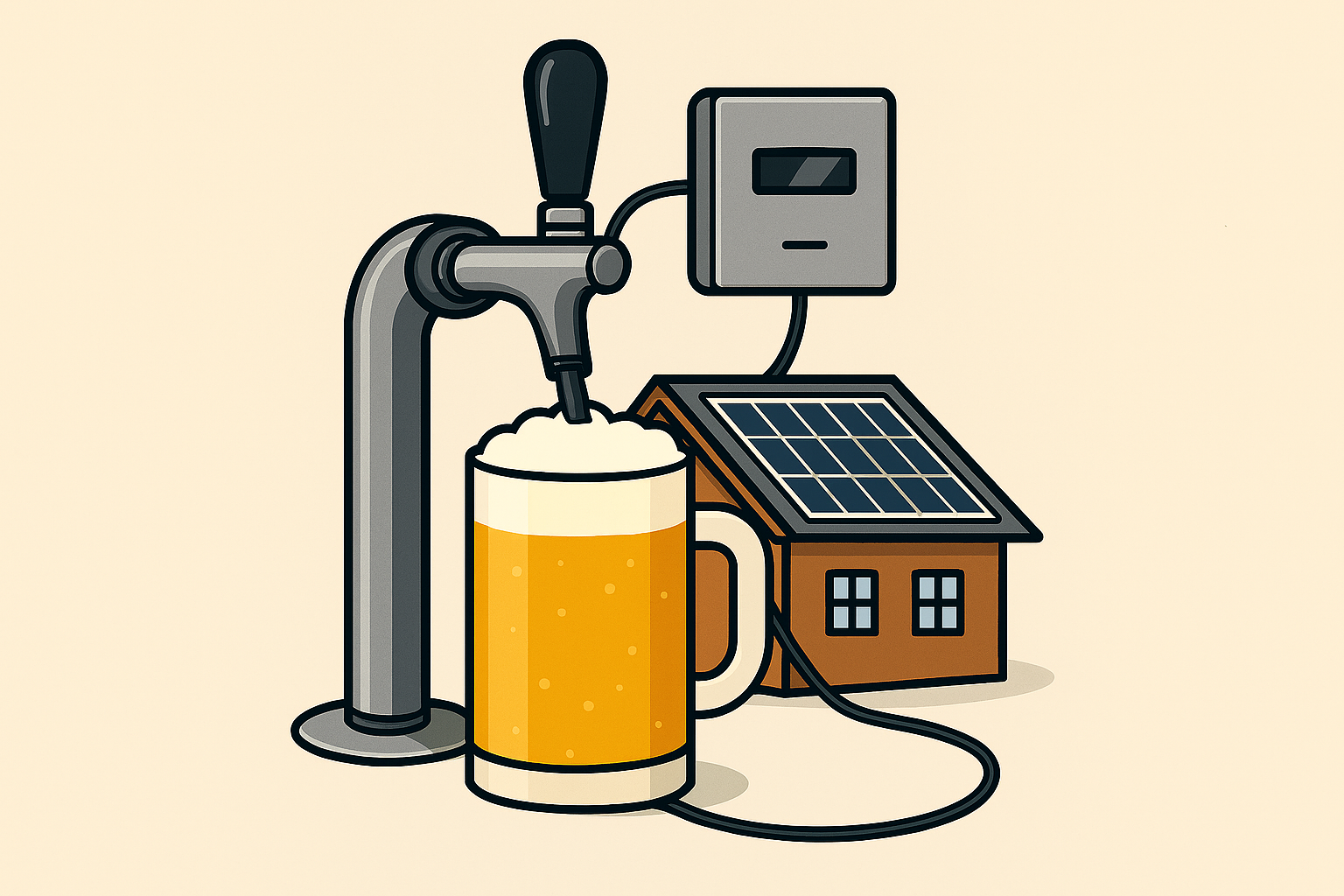


Cooperative game theory for energy sharing in energy communities - by Saurabh Vaishampayan