
Sailing ships and falling dominos
Decision making for cascading uncertainty - by Mengmeng Li
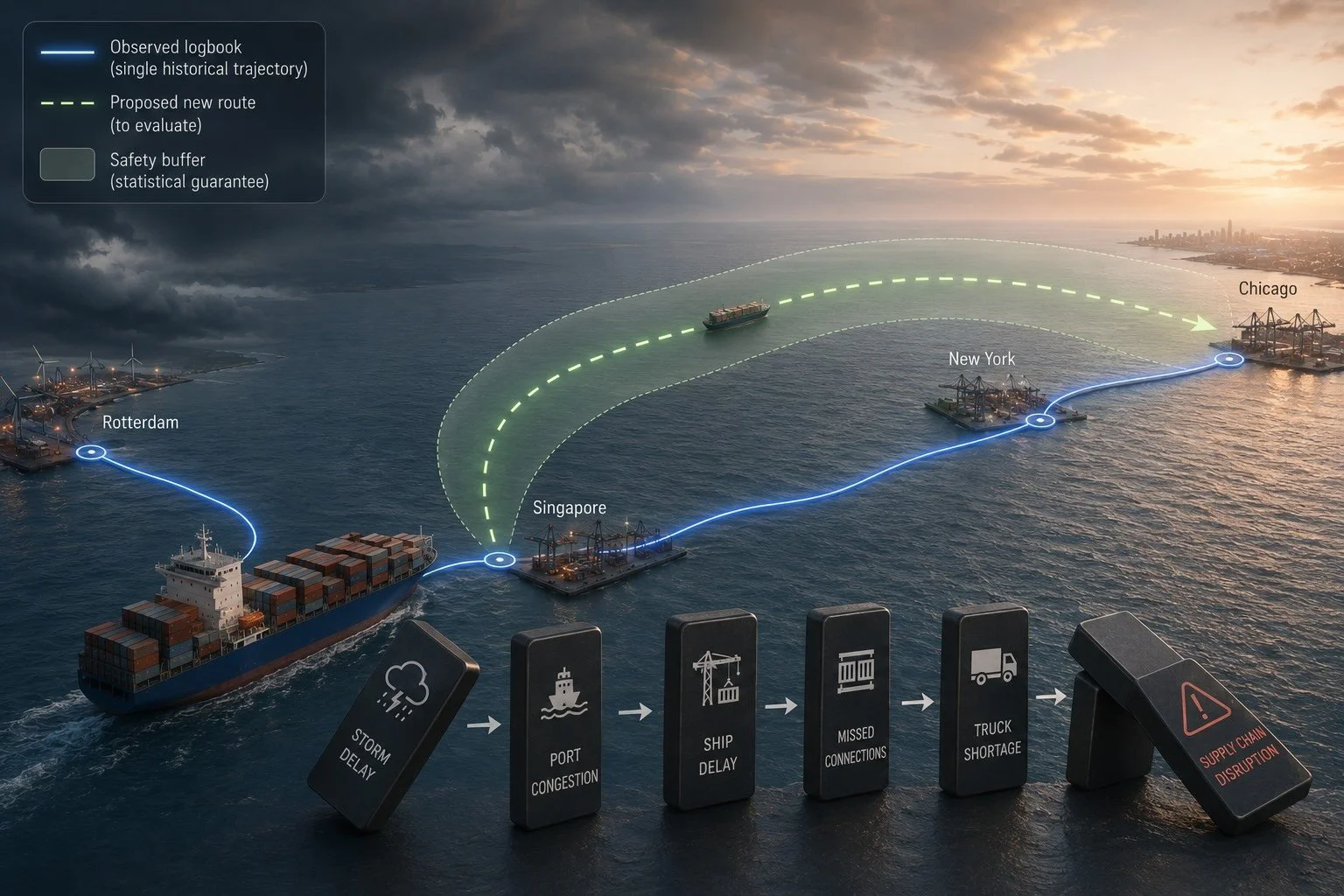
Imagine you are put in charge of a global shipping network and you want to come up with a more efficient routing plan. However, you can’t afford trial-and-error, because a failed experiment means congested ports and lost millions. You also can’t rewind history to see what would have happened if you had sent a cargo ship to Tokyo instead of Singapore. You only have one historical logbook of the routes actually taken and you have to evaluate your new strategy using only that single timeline.
How cautious should you be when rolling out a new plan? If you are too reckless, the supply chain collapses. If you are overly cautious, nothing ever improves. That delicate balancing act is exactly the problem we tackle.
Could an AI help you? Traditionally, many AI tools assume that data behaves like a series of coin flips. Every flip is completely independent of the last. But if a massive storm delays a ship in Rotterdam today, it could lead to a traffic jam in New York next week, which means missing truck drivers in Chicago next month. Everything is connected in a chain reaction, like falling dominoes.
How do we realistically evaluate a new shipping route safely using a single chain of dependent data? We develop a statistical principle that reflects how rare events, such as cascading port delays, actually unfold when observations are linked over time. Using this, we mathematically "transform" the uncertainty of our past shipping logs to figure out what the uncertainty of our new strategy will be.
Our method is like choosing a faster route while keeping a backup plan. It guarantees that we will do better than the route we already trust, even in the worst case. And among all ways to get this guarantee, it gives up the least possible benefit. So we can safely move to better routes without overpaying for protection.
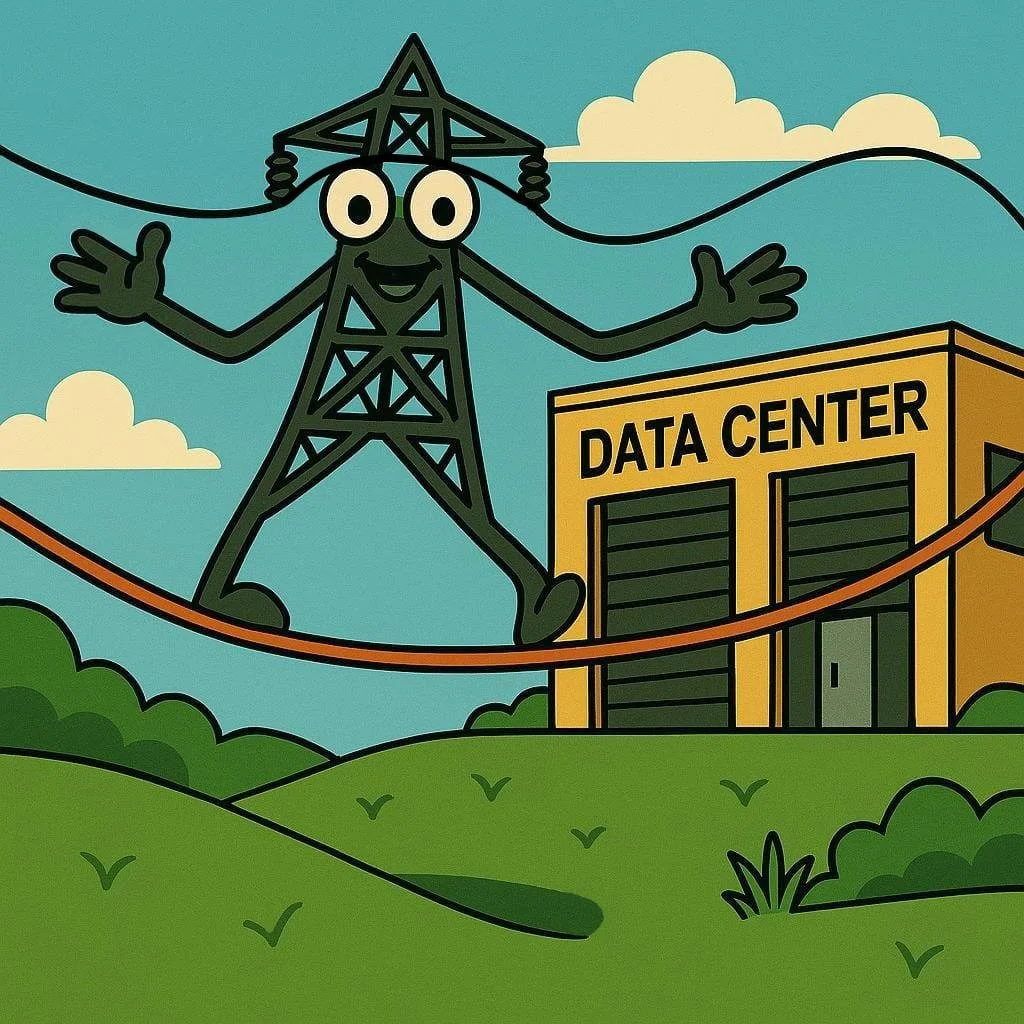
Text by Mengmeng Li; illustration generated with ChatGPT








Learning to adjust a control algorithm without giving up what we already know - by Jonas Ohnemus