
Teaching robots to be curious
How curiosity, rather than imitation, can help robots make sense of the physical world - by Tim Lücking
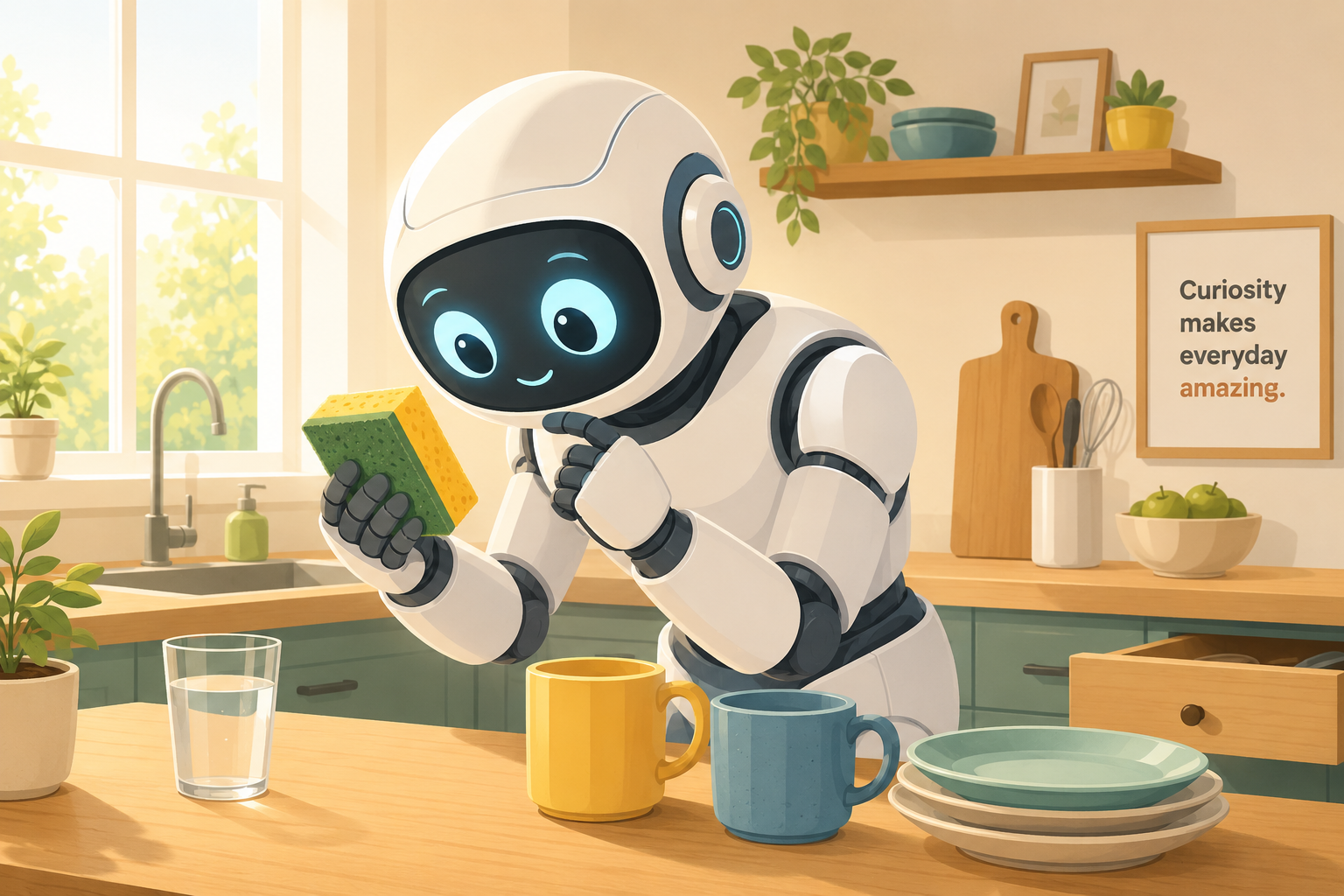
Who wouldn’t want a robot at home, a chef, a cleaner, something to take care of all the annoying chores? Modern AIs can feel like magic: they write poems, generate movies, and solve difficult mathematical problems, yet not one of them can load a dishwasher. The reason comes down to how these AIs learn. They are brilliant imitators: they copy millions of human examples, and the internet offers an endless library of text and images to copy from. The physical world comes with no such library. It is messy and unpredictable, full of things no one could anticipate: a spill, an unfamiliar mug, a drawer that sticks. Teaching a robot this way would mean a person demonstrating every chore, with every object, by hand, for every unexpected situation. That is simply not possible.
But humans don’t learn everything by copying. A child dropped into a new room needs no instructions. They reach for whatever catches their eye, shake it, play with it, and watch what happens, always drawn to whatever seems most exciting to try next. Long before anyone teaches us anything, curiosity pushes us to explore the world and make sense of it on our own.
Our research gives robots the same drive. Instead of following a human teacher, the robot explores the parts of its world it understands least, building its own knowledge of how things work, driven by its own curiosity. In a kitchen, it learns like a child. At first, the mugs, sponges, and plates are all equally mysterious. As it nudges and grasps them, some become predictable: a plate slides the same way every time. Others keep catching it off guard: a sponge that squishes differently at every touch, or water that sloshes when a glass is moved. The robot returns to these until they, too, start to make sense, then moves on to whatever still surprises it.
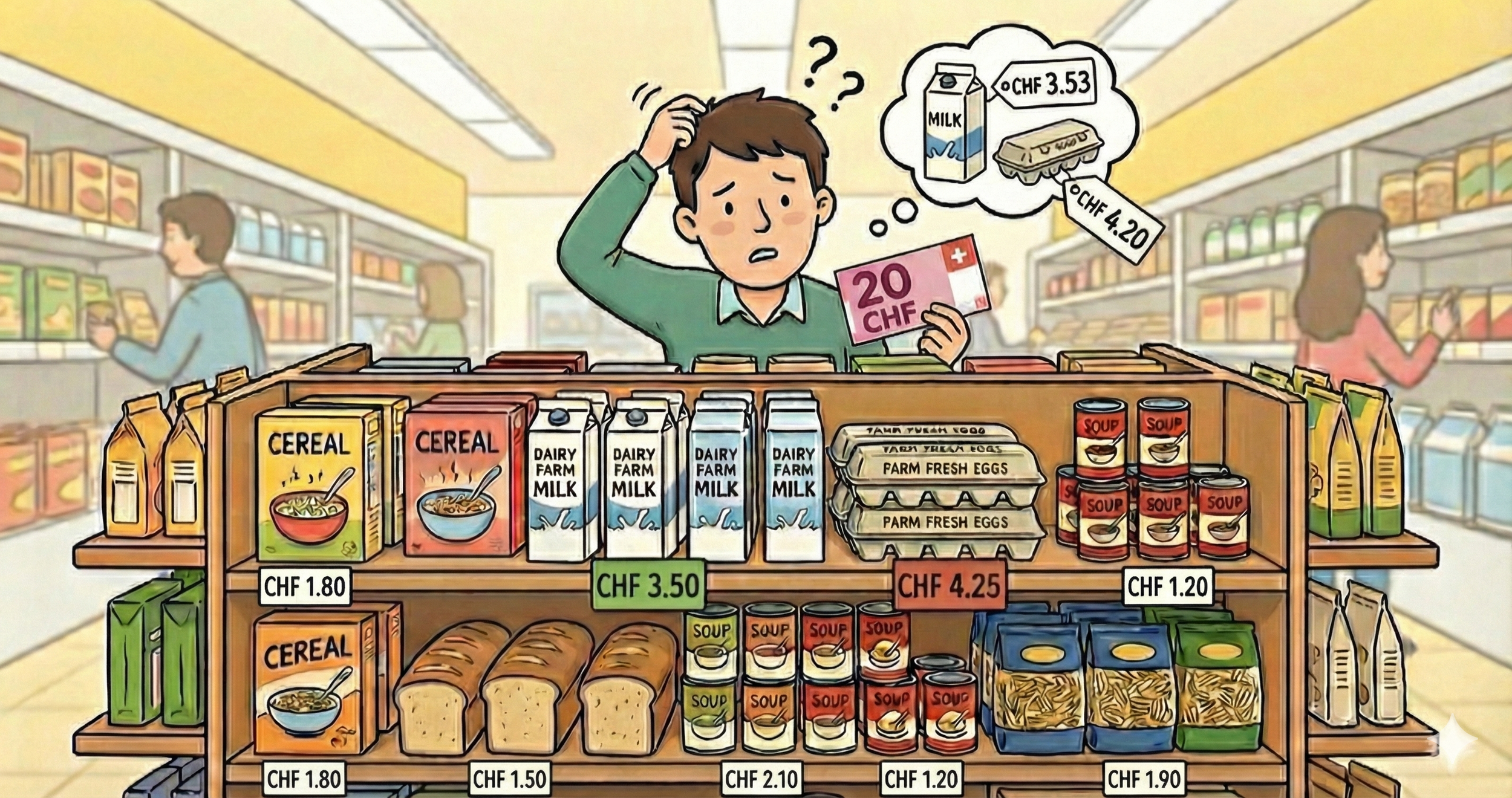
To make this work, we turn curiosity into a reward, using a method called exploration via disagreement. Before it acts, the robot tries to predict what will happen next, and it does so several times over. When it faces something it has handled many times, all its guesses agree. When it meets something new, like an unfamiliar mug or a drawer that sticks, the guesses scatter, each expecting something different. That disagreement is the clue: it points to what the robot has not yet figured out. We reward it for chasing exactly those moments, because the edge of what it knows is where it learns the most.
The result is a robot that teaches itself, with no human in the loop. It has spent its time in the kitchen the way a child would, poking, grasping, and playing until the sponges, glasses, and sticking drawers hold no more surprises. So when the moment finally comes, loading the dishwasher is just one more thing it already knows how to do.
Text by Tim Lücking; illustration generated with ChatGPT











How curiosity, rather than imitation, can help robots make sense of the physical world - by Tim Lücking